Idea of South broadcast

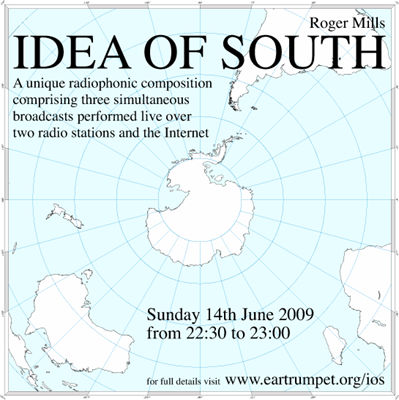
image Idea of South – Unique Radio Program

Sunday 14th June 22.00-23.00 (13.30 -14.00 GMT)

Idea of South – A unique radiophonic work by Roger Mills broadcast by 2SER and FBi radio in a dual station simulcast and accompanying internet stream.

Composer and sound artist Roger Mills has produced an immersive new radio work, exploring the sound of the southern hemisphere as three individual parts to be listened to on two radios and an iPhone or computer.

This has never been done before !

Simply tune your radios into 107.3 fm (Radio 2ser) an 94.5fm (FBi radio) and log onto the internet stream at www.eartrumpet.org/ios to listen to all three parts.

Don’t have more that one radio or a computer ?

Bring a radio down to Don’t Look Gallery, Dulwich Hill for a multi radiophonic experience as people tune their radios into a truly immersive sound environment. The evening starts at 18.00 and features DJ’s and a performance by Forenzics.

BIO

Roger Mills is composer and sound artist who has just returned to his native Australia after living in the UK for twenty years. In that time he wrote and produced albums with Statik Sound System (Cup of Tea Records) and remixed tracks for British electro rockers Kosheen. Other credits include his collaboration with Grantby on Mo Wax’s Headz 2 and Sydney’s DJ Soup on Creative Vibes ‘Evolutionary Vibes III’, featured as album of the week on Tripple J.

His most recent work includes album projects for Turkish singer Mircan Kaya and British Jazz quintet Limbo featuring Jim Bar (Portishead).

Posted in notice | Tagged , , | Leave a comment

The German idea of South – high noon in the Black Forest

Spernere mundum, spernere te ipsum, spernere te sperni.
Scorn the world, scorn yourself, scorn being scorned.
St Filippo Neri quoted by Goethe

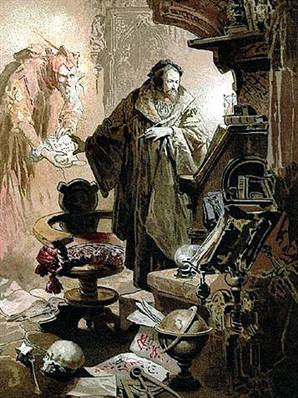
The Faustian quest

image Johann Wolfgang von Goethe is today the proud hero of enlightened Germany. Institutes in his name disseminate German culture around the world. And the core of this culture, Das Drama der Deutschen, is Goethe’s most key work, Faust (1808). Goethe’s drama turns on a deal between Mephistopheles and Faust: Mephistopheles will do the hero’s bidding on earth if he can show Faust a moment that we would like to last forever. The contract embeds a critical paradox: a quest in which the ultimate goes is to be free of the need to quest.

In the case of Faust, the assumption is that the state of acceptance represents the ultimate goal of life—to be happy where one is. It opposes the restless questing for a distant goal against the simple acceptance of life as it is. This is an opposition between today and tomorrow, the relation between the ground under your feet and the horizon beyond, sequence of noon above and sunset disappearing, and, in the Germany story particularly, the relation of South to North.

This simple opposition between here and there provides a way of reading the idea of South in German culture. There are moments when tomorrow eclipses today and North triumphs over South. And there is an alternative line whereby the ground under one’s feet offers blessed relief from the ever receding horizon beyond, and South supersedes North. In the case of Goethe, we see a balance between both.

For Goethe personally, this opposition is played out during his journey through Italy. He contrasts the happy lives of Neapolitans against the deferment of pleasure in the North:

Nature compels the Northerner to make provisions and preparations, the housewife to pickle and cure, so as to supply the kitchen for the whole year, the husband to see to the stores of wood and grain, the fodder for the cattle, etc. Consequently the most beautiful days and hours are lost to enjoyment and devoted to work… These natural influences, which have stayed the same for millennia, surely have determined the character of northern nations, which are admirable in so many respects.[1]

Goethe’s Italian Journey is told as a struggle between his restless German self and the ‘school of light and merry living’ that beckoned him in Naples and Sicily. Goethe identified with the Northern mentality, while acknowledging the lack of Southern equanimity.

Other thinkers, however, turn this confirmation of North identity into a condemnation of the South. Others still reverse this hierarchy and see the Southern equanimity as superior to the distracted North. And then within Germany itself is its own internal division between North and South that is constitutive of its national identity.

The Classical Ideal
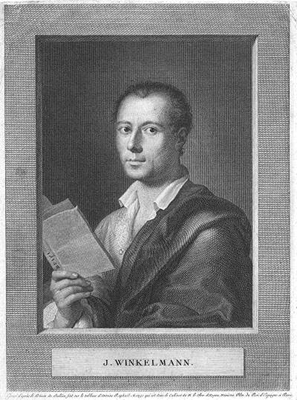
image Goethe’s travel to Italy was inspired by Johann Joachim Winckelmann’s pioneering treatise on classicism, History of Ancient Art (1764). Winckelmann articulated a positive relation to South, at least to Germany’s immediate south in the sites of classical civilisation, Italy and Greece.

The cosmography for this classical world was derived by Winckelmann from the Aristotelian theory of climate. In Aristotle’s position, extremes of climate focus the individual on physical needs, while temperate environs such as in Italy or Greece enabled creativity to flourish: ‘A flower withers beneath an excessive heat, and, in a cellar into which the sun never penetrates, it remains without color.’[2] While this understanding may seem to position Germany unfavourably, at the cold extreme where little grows, Winckelmann’s project has been interpreted as aligning Germany culture with the classical ideal.

Enlightenment

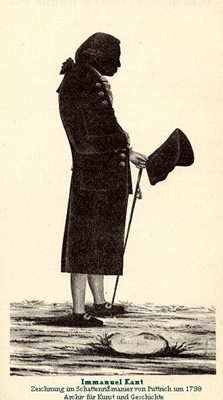
image With the enlightenment came a notion of modernity that distinguished forward looking nations from those oriented backwards. Immanuel Kant’s essay Answering the Question: What is Enlightenment? (1784) argues that ‘Enlightenment is mankind’s exit from self-incurred immaturity’. In this can be seen a foundation for the difference between an active North and a dependent South.

Kant clearly believes that the world is not equal, but he refrains from geographic determinism. In his earlier text On the Different Races of Man (1775), Kant had argued for the superiority of the German peoples. Though Kant had a lifetime interest in geography, he did not subscribe to the climate as a cause for racial hierarchy. Such would contradict his overall philosophy of freedom. In his Anthropology from a Pragmatic Point of View (1798) he argues that ‘it does not depend on what Nature makes of man, but what man makes of himself.’ For Kant, the critical factor determining racial hierarchy was less defined, amounting to a kind of infection that afflicted the darker peoples.[3] Though maybe not part of Kant’s world view at the time, his categorial imperative (the moral principle of reciprocity, that one acts as one would wish others would act) can be seen as a driving force in the development of new southern perspectives, which seek more reciprocal intellectual exchange between the West and its other.

What the dialectic leaves behind
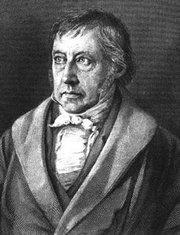
image In the case of Georg Wilhelm Friedrich Hegel, however, there were clear reasons in nature why the North was superior to the South.

In his lectures on the philosophy of history (1837), Hegel placed Germany in a privileged position to inherent the mantle of civilisation from the classical world. He developed the Aristotelian position beyond a simple symmetrical relation between North and South, cold and hot. For Hegel, history demonstrates that the North is privileged:

The true theatre of history is therefore the temperate zone; or, rather, its northern half, because the earth there presents itself in a continental form, and has a broad breast, as the Greeks say. In the south, on the contrary, it divides itself, and runs out into many points.[4]

Hegel distinguishes a developed North from an undeveloped South. To argue this point, he cites the case of the nature in New Holland, where streams have not developed channels as rivers but ‘lose themselves in marshes’.[5] The world contains an obvious vertical hierarchy.

Laterally, Hegel articulates the Occidentalist position that progress follows the sun, therefore ‘The History of the World travels from East to West, for Europe is absolutely the end of History, Asia the beginning.’[6] But while the sun may once have shone in countries like India and China, it has never graced the dark expanse of Africa—‘the land of childhood, which, lying beyond the day of self-conscious history, is enveloped in the dark mantle of Night.’[7] So while the lateral journey of the sun places east in the beginning (dawn) and west at the end (sunset), the South is a permanent night. In this vision of a dark South, Hegel extends the solar trope beyond analogy into pure metaphor.

Nordic ideals
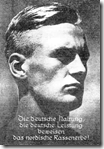
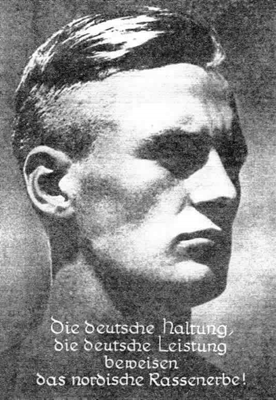
image By the nineteenth century, this conceptual hierarchy of North and South began to take political form as a belief emerged in the racial supremacy of Nordic peoples. In 1851, Schopenhauer argued for the superiority of the white races in direct contradiction with Aristotle. It was the very physical hardships experienced by white peoples in their migration north that equipped them with powers of invention.

This different became the subject of scientific study. In 1888, the Russian émigré known as Madam Blavatsky published The Secret Doctrine, the Synthesis of Science, Religion and Philosophy which focused this argument particularly on the Aryan races. In 1930, the leading intellectual forces of the Nazi movement, Alfred Rosenberg, published The Myth of the Twentieth Century which located the origins of the Aryans on a lost landmass off the coast of north-west Europe, from where they spanned eastwards to found civilisations as far as Iran and India.
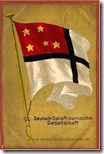
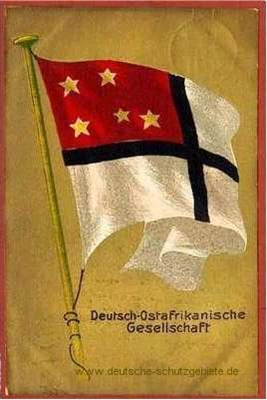
image Such views serviced Germany’s colonial ambitions. In the early 20th century, these views were used to justify the policies of the Deutsch Ostafrikanische Gesellschaft in Africa, for whom ‘The purpose of colonization is, unscrupulously and with deliberation, to enrich our own people at the expense of other weaker peoples.’[8] In 1903, German colonists invaded Namibia displacing the Herero people who subsequently rebelled. In response, the Germans drove the Herero into the deserts and poisoned wells, herding the survivors into concentration camps to work as slave labourers. This is regarded as the world’s first genocide, and a rehearsal for the later extermination of Jews. In response to international protest at the time, the Germans claimed that the Herero were sub-humans.

image Nordicism was associated with particular physical features, such as dolichocephalic heads (long-skulled), blond hair, blue eyes and tall stature. In 1933 Nazi theorist Hermann Gauch argued that birds can be taught to talk better than other animals because ‘their mouths are Nordic in structure.’ Such racial superiority became the justification for conquest. For Adolf Hitler, the German quest was to plant the ‘seed of Nordic blood’ and so regenerate the world.

This quest to conquer the South reached its apotheosis with the Third Reich—so ends the story of Northern superiority. But this is not the only German story. Amongst a parallel line of thinkers we can see alternative attitudes, sometimes even reversing the relation between Northern struggle and Southern acceptance.

The ‘great noon-calm’

According to the dominant narrative, the restless North overcomes a lazy South. But there were many for whom this hierarchy was reversed—the dislocated North seeks a centred South. Oswald Spengler published Decline of the West in 1918, arguing for an organic notion of culture that grows and dies. He described Gothic architecture as the expression of a Faustian North, with its focus on the ‘I’ and flying buttresses.

He contrasted this against the Apollonian South, realised in Renaissance, whose contribution is that ‘in lieu of the Northern Sturm und Drang it breathed the clear equable calm of the sunny, carefree and unquestioning South.’[9] The Renaissance gave expression to the ‘fullness of light, the clarity of atmosphere, the great noon-calm, of the South’. While still elevating the Northern Gothic as a source of innovation, Spengler shared Goethe’s understanding of the South as an alternative way of being.
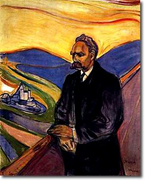
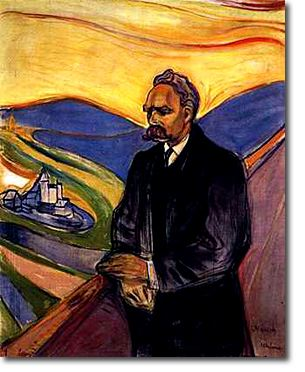
image The reversal of value was given most powerful expression by Friedrich Nietzsche. Nietzsche criticised the Aristotelian hierarchy of temperate zones and praised ‘tropical man’. In Beyond Good and Evil (1886), Nietzsche continued his attack on Christianity, particularly northern Protestantism.

He contrasted the heavy German music of Wagner with the ‘childish delight’ of Mozart. The Northern German is ‘manifold, formless, and inexhaustible’, associated with clouds, twilight and dampness—all that is still in the process of development. In Wagner, one finds ‘no beauty, nothing of the south, nothing of the fine southern brightness of heaven, nothing of grace, no dance, scarcely any will for logic’. The Germans ‘belong to the day before yesterday and the day after tomorrow—but they still have no today.’

One of Nietzsche’s key ideas is the Eternal Return of the Same, in which we are bound to experience our immediate present forever, invalidating the ceaseless questing beyond. Like Goethe’s Faust, Nietzsche focused on the elusive quest to be without quest.

Caught between North and South

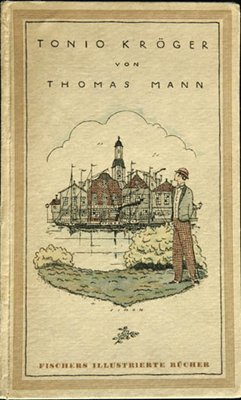
image In the arts, the division between North and South is often more balanced. Thomas Mann’s novella Tonio Kröger (1898) seeks to understand how this opposition can be contained within a single person. The hero is born of a Puritanical German father and impulsive Italian mother. He escapes the bourgeois comforts of the north for the ‘cities of the south’, ‘for he felt that his art would ripen more lushly in the southern sun’.[10] Yet there is a time we he also seeks the heartfelt melancholy of the North, fleeing to Denmark, saying ‘I can’t stand all that dreadful southern vivacity, all those people with their black animal eyes. They’ve no conscience in their eyes, those Latin races.’[11] In the case of Mann, this incommensurability of North and South is a source of tragedy.

We can see modern versions of this with films such as Doris Dörrie’s Bin ich schon? (Am I Beautiful?) In this road movie, a German family undertakes the epic journey across to Spain for a holiday. In the process, the film continually contrasts the obsessive German mentality with Spanish spontaneity.[12] For Dörrie, the passion of the South undercuts Northern pretensions. image
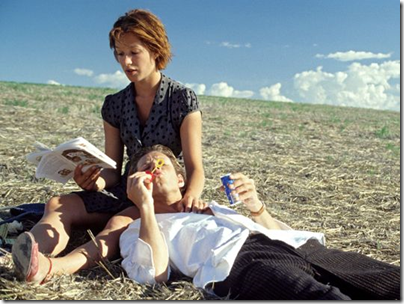
While the South may be variously charged positively or negatively, it is inevitably cast as other to German culture. But what is authentic German culture? The popular image consists of men in lederhosen slapping their thighs, drinking steins of beer and ogling at the maidens in dirndls. The ‘Oktoberfest’ Germany is only a recent appendage—Bavaria is only a late addition to the German kingdom. Indeed, the internal polarity between Bavaria and Prussia may almost be as stark as the external difference between Germany and Italy.

The South within

image As the ‘Texas of Germany’, Bavaria’s folk culture is at odds with the restless Prussian north. Its Catholic culture reflected a traditional allegiance to ritual contrasting with the austerity of the Protestant north.

From the north, Bavaria is seen as a quaint and ridiculous region. When Bismarck was manoeuvring to incorporate Bavaria into the German state in 1866, he described the typical Bavarian as ‘half-way between an Austrian and a human being’. Eventually, when the treaty between north and south was being framed, the Jewish founder of the National Liberal Party, Eduard Lasker, advised, ‘The girl is very ugly indeed, but nevertheless she must be married.’ Bavaria was a necessary evil, wrested from Austria to bolster the Prussian state.

The treaty was negotiated with ‘mad’ King Ludwig II, who is most famously remembered today for squandering his kingdom’s fortunes on personal follies. But as with most southern stereotypes, there’s another side the story. Luigi Visconti’s film version of Ludwig’s biography constructs a scenario parallel to his depiction of Sicily in The Leopard: a proud aristocrat attempts to sustain the magnificence of his position against the odds of an ambitious new bourgeoisie. Bavaria is proud, sensitive, cultivated, while Prussia is brazen, boorish and philistine.

There is a strain of German culture which expresses Drang nach dem Süden, a yearning for the South. This is a South of acanthus leaf, orange grove and marble colonnade. It is a world of fantasy and wonder, far from the austere Prussian north.[13]

For the Altbayen, Prussia was an upstart nation. The word ‘Preuss’ was used in Bavaria to describe any unwelcome foreigner. Bavaria’s great cultivation was reflected in the capital, Munich, known as the ‘Athens of Isar’. Its destiny as a cultural capital culminated in the majestic Ring Cycle, staged for Wagner by King Ludwig in the town of Bayreuth. Later the English writer Walter Pater evoked the image of King Ludwig as a ‘northern Apollo’…’god of light, coming to Germany from some more favoured world beyond it, over leagues of rainy hills and mountain, making soft day there.’ To a degree this creative leadership continues today in jewellery, where exchange with the Munich Academy in Australia and New Zealand has inspired their own cultures of adornment.

Conclusion

While this is a core story of the German idea of south, it cuts short at the significant German interest in the Southern world, particularly the Pacific. This includes the German presence in New Guinea, Solomons, Samoa, the settlements in South America, as well as the extensive network of Lutheran missions in Australia. Germany is likely to be a regular presence as the idea of south continues its journey.

In the case of Germany, we find a fraught story that seems to realise the most extreme version of Southern inferiority. Yet because of this, there are lines of thought that develop quite a strong idea of south—as an eternal midday, clear, still and in the moment.


[1] J.W. Goethe Italian Journey (trans. Robert R. Heitner) New Jersey: Princeton University Press, 1994 (orig. 1786), p. 265

[2] Johann Joachim Winckelmann’s History of Ancient Art (translated by Giles Henry Lodge) J. R. Osgood, 1849, p.36

[3] See Jonathan Goldberg Tempest In The Caribbean Minneapolis: University of Minnesota Press, 2004

[4] G.W.F. Hegel The Philosophy Of History (trans. J. Sibree) New York: Dover, 1956 (orig. 1831), p. 80

[5] The Australian writer Paul Carter has described this anxious policing of boundaries between water and land as ‘dry thinking’.

[6] G.W.F. Hegel The Philosophy Of History (trans. J. Sibree) New York: Dover, 1956 (orig. 1831), p. 103

[7] G.W.F. Hegel The Philosophy Of History (trans. J. Sibree) New York: Dover, 1956 (orig. 1831), p. 104

[8] Marc Ferro Colonization: A Global History (trans. K.D.Prithpaul) London: Routledge, 1997 (orig. 1994), pp. 83-84

[9] Oswald Spengler The Decline of the West (trans. Charles Francis Atkinson) New York: Vintage, 2006 (orig. 1918), p. 123

[10] Thomas Mann ‘Tonio Kröger’, in (ed. ) Death in Venice and Other Stories (trans. David Luke) London: Vintage, 1998 (orig. 1903

[11] Thomas Mann ‘Tonio Kröger’, in (ed. ) Death in Venice and Other Stories (trans. David Luke) London: Vintage, 1998 (orig. 1903), p. 167

[12] Peter M. McIsaac ‘North-South, East-West: Mapping German Identities in Cinematic and Literary Versions of Doris Dorrie’s “Bin ich schön?”’ The German Quarterly (2004) 77: 3, pp. 340-362

[13] Christopher McIntosh The Swan King, Ludwig II of Bavaria London: A. Lane, 1982, p. 11
Posted in Developmentalism, journey, Lawless, West | Tagged , , , , , , , , | Leave a comment

When children grow up in the Kingdom of Bellavista

imageIn the Kingdom of Bellavista there lived two peoples. For centuries they had lived in perfect harmony, but lately there had been troubles.

High on the hill, there lived the refined nobles, who cultivated highly sophisticated sciences and arts. With great care and kindness they managed the affairs of the realm, particularly those they fondly called their ‘children’, the peasants living below in the valley.

For many years the kingdom was happy and prosperous, but then a visitor came from a far away land. He was a travelling minstrel who liked to stir trouble. When he heard the peasants referred to as children he sung, ‘But don’t you find that a bitter pill? Are you not adults just the same those on the hill?’ The minstrel sowed dissent in the peaceful kingdom. Soon other minstrels emerged from within the kingdom with songs like ‘No kidding’, ‘Not younger anymore’.

They started to ask questions: What shall we call ourselves that has more dignity than ‘children’? Eventually they determined that they simply wanted to be known as the ‘people of the valley’. They sent a deputation up the hill and demanded recognition of their new status.

To their surprise, they found that the nobles above were most understanding of their concerns and even begged forgiveness for their insensitivity. But more than that, they even proposed to establish a Centre for the Study of Valley People.

The peasants returned home vindicated. They felt proud that they were no longer children to be looked down on, but ‘people of the valley’ with their own distinct experiences and values.

But in the valley, there was particular group of people who were confused by the new arrangement. Down in the valley lived a small community of nobles, descended from those on the hill, whose function was to manage customs on the river port. They were accustomed to their privileged status as ‘adults’ living down among the ‘children’. But now they witnessed what were previously known as ‘children’ proudly identifying themselves as ‘people of the valley’. And these mere children seemed to win the approval of those from above.

So the river nobles decided they needed to change their story. They began to describe themselves as ‘people of the valley’ too. But not everyone was convinced of this, particularly from outside. Their peasant neighbours still saw them as patronising hill people, not genuine valley people like themselves. And their noble ancestors above viewed them as remnants of a older less enlightened time.

Looked down above, excluded from below, the valley nobles felt lost and abandoned. They held a meeting to discuss their plight. Amid the despair and confusion, a voice rose above the crowd. It was Tandurrum, an elder of the native river people wrapped in a traditional fur cloak. She generously offered to assist the river nobles: ‘As an original inhabitant of the valley, let me help you to change your ways so that you will feel more at home in the valley. Let me help you change from ladies and gentlemen to sisters and brothers…’ As she continued to explain how the river nobles could become people of the valley, their mood lifted and they could see a way forward.

So, would the river nobles take the advice of the original inhabitants, forsaking their historic privileges? Or would they continue to uphold the ideals of the hill, and become the overlooked in the Kingdom of Bellavista?

To be continued…

Posted in Australia, Developmentalism, provocation | Tagged , | Leave a comment

Do we need another north?

The South African design expo Design Indaba makes the claim that global ascendency has passed to the other half of the world:

Stand back Milan, London and New York, here comes SOUTH! SOUTH is an inversion of hand-me-down Eurocentric creativity, a world map turned upside down conceptually, so that South Africa is on top. Over the past few years Design Indaba has witnessed the organic emergence of a new creative ethos. With South Africa’s diverse, rich heritage as source material, and inspired by the rebirth of the South African nation, definitions that move beyond ethnicity, religion, race or language have emerged.

This marketing campaign is useful for raising some important questions about the idea of South:

  • If North and South are competitors, what is the game in which they are participating?
  • Is there a way that South can provide not only a new slumdog competitor in the global fame game, can it also help craft some new rules?
  • What rules might these be?
  • Why shouldn’t a poor country like South Africa have the opportunity to enjoy the fruits of global glory?
  • If South Africa benefits from this inversion of value, what about other countries who share this part of the world, like Madagascar, Australia, Fiji and Argentina?
Posted in Aspirationalism, Developmentalism, South Africa | Tagged , | Leave a comment

Verticalism and its underbelly

How is it that the North seems to sit above the South? Does this support a world that gives superior value to what originates from the North, as opposed to the problems in the lowly South? How might this vertical orientation be contested?

This paper was presented at the International Conference on Hegemony, Counter Hegemony and Alternatives to Hegemony: Implications for the South in Kuala Lumpur Malaysia, February 2009

My starting point for this paper on hegemony is somewhere below the level of formal political relations. I address certain cognitive elements that we employ when we attempt to orient ourselves in the world. But this is not to avoid the political. Rather, I attempt to explore the extent to which hegemonic structures reach into our personal consciousness. I argue that the south-south axis requires not just a political re-alignment, but also a radical re-visioning of our everyday world.

Scene by Kalak Kav

To locate this everyday world, it is useful if we gather together at the same location. For a location, I am using this image of a country landscape that I obtained from Flickr. It’s a typical pastoral scene of a rural field with the sun setting over a mountain in the distance. To locate ourselves in the phenomenological dimension, let’s consider the very basic scenario. You’re touring around the area and decide to stop the car and take a stroll to get some exercise. You know there are no laws about trespassing here so you are free to travel where you wish. So where would you go?

Most people when asked this question will elect to walk up the hill on the horizon, towards the setting sun. Not everyone chooses the same direction, but this seems the default option. The actual direction itself is not critical to my argument. But by considering some of the dimensions at play in the decision to take the default direction we can begin to think about how the world might be skewed towards dominant powers at an everyday cognitive level.

So, where are we going when we move towards the hill? In the first instance, we are moving towards the light. The illuminated world provides us with a space of knowledge and action, as opposed to the darkness looming behind us. In following the sun we travel west, toward the future, leaving the past behind.

As well as moving towards the horizon, we are also fixing our journey on a hill that stands out from the plains. We are choosing a singular element that acts as a figure on the ground of the landscape.

And, finally, we are more than just focusing on a unique destination; we are also elevating ourselves above the general scene. From this point, we can then see not only the field that we have emerged from, but the distant horizon beyond, on which another hill sits.[1] But there’s more than simple information gain in reaching the summit. There’s also a sense of power in being able to survey the world around us. So we used to say as children whenever we found a vantage point above our playmates – ‘I’m the king of the castle, you’re the dirty rascal.’ The choreography of power seems essentially vertical.

Looking up to power

Thank you for lingering at this scene. My challenge now is to reward your patience by taking us back to the matter of common concern—the global hegemony in which the interests of capital in the North dominate the lives of the poor in the South.

Let’s step back and consider our terms. The word ‘hegemony’ is derived from the ancient Greek word hegeisthai, meaning ‘to lead’. In the political scene, the dominant class leads subordinate classes. The most efficient mode of leadership is self-managed, where those in the subaltern position orient themselves of their own accord towards the interests of the hegemon. This is particularly effective at the level of everyday habitus, as we go about ordering our priorities and orienting our trajectories. This quotidian activity is grounded in our phenomenological being—not in the contingent levels on our decision-making focus, but in the evaluative dimensions by which we order priorities. This kind of hegemony operates not when we decide to become a lawyer or a banker, but in our overall interest in making our way up in the world. There are the evaluative dimensions that make a decision possible.

Some of the links between these phenomenological dimensions and power have been well studied. The dimension of light is one of the most pervasive. In developing the concept of ‘heliocentrism’,[2] Derrida traced light as a dominant trope of Western thought from Plato’s myth of the cave to the celebration of Enlightenment. But Derrida was also interested in the shadows cast by this trope. In order to shine the light on reason, shadows had to be cast over the darkness of the world. Such a metaphor colluded with the construction of empires through a slave trade that required the denial of empathy to those with darker complexions. Whether or not this metaphor was originally conceived in classical times as justification of empire, its reproduction during European colonisation was certainly allied to the control of colonised peoples.

As we noted in our rural scene, in being drawn towards light we are also oriented westwards. In the idea of West[3] that informed British colonisation, the setting sun signalled the future of the world. With the Enlightenment came a developmentalist position that placed the West at the forefront of historical time, and consigned the colonised world to backwardness.[4] Thus we have the hegemony of the already developed world over the still developing—the world that arrived first over the world that came in third.

The second dimension was towards the unique element. The privilege of the rare above the common is synonymous with hierarchy. The aristocratic control of rarity in the feudal times was eventually replaced by a bourgeois set of values that Bourdieu identifies as ‘distinction’.[5] From the post-revolutionary world emerged the great art galleries owned by the state and wealthy patrons. These galleries were filled with the singular world treasures, often looted from the periphery. And within the West, the cult of masterpieces was constructed through the invention of ‘genius’ as the gateway of value through rare gifted individuals. Genius is the gold standard by which the art market has flourished as a system of global money laundering for the elite of the elite.

image

When we attempt to visualise a hierarchical society, we often imagine a pyramid. Even a nation founded on democracy such as the United States of America takes the pyramid as its official seal. Designed in 1782, the US seal consists of an unfinished pyramid over which is an eye within a triangle, as a detached summit. The motto above Annuit cœptis—‘he approves of our undertakings’—is taken from Virgil’s Aeneid. The motto below Novus ordo seclorum— ‘a new order of the ages’—also taken from Virgil, though in this case the Eclogue.

This eighteenth century design is a confident expression of a new republic, assured that its future destiny is to govern the world. As a committed democracy, the current is not underpinned with the portrait of a monarch. The summit of the pyramid is replaced by the single eye, representing providence.[6]

But rarity is not enough to account for the choice of pyramid as a symbol. It can equally be represented two-dimensionally by the centre of a circle. The pyramid is inevitably a symbol of verticality. Rarity ascends. The precious is elevated above the common. From this height, we can survey the vertical dimension that pervades our very understanding of what a hierarchy is. This dimension distinguishes superiors from their inferiors and high ideals from base motives. The upper classes rule over the lower classes. Our lofty ideals transcend shallow thinking. It seems something at the core of our being that we gaze upwards. Combined with the twin symbol of the eagle, the American dollar is predicated on this logic of verticalism that identifies power as a form of elevation above all.

Verticalism

Verticalism and power seems almost synonymous. There are strong reasons why we orient ourselves upwards. As noted by the art historian Rudolf Arnheim, the vertical dimension has gravity on its side.[7] Any physical force coming from above thus has an extra advantage over its opponent. And in terms of strategic information, the general who surveys troops from a hilltop has advantage over his rival in the valley. That power rises to the top seems too obvious even to articulate.

Yet there are countervailing valencies that favour the lower end. After all, the base of our world is solid. And in the ground lie buried the roots from which sustenance is gathered for the world above. Despite this alternative perspective, power is not seen to emanate from below, at least in the West. Verticalism is characteristic of the neo-Platonic tradition of thought, which raised ideas above the base world of matter.[8] Christian cosmology helped enforce this distinction with the image of a heaven above and a hell below.

We could very well then align this ‘verticalism’ alongside ‘heliocentrism’ as a dominant metaphor of Western thought. But does it bite? The metaphor of light was clearly complicit in the practice of slavery and colonisation of darker peoples. There seemed no obvious difference in the bodily heights of coloniser and colonised. So how did the imperial power come to be positioned above its subjects?

We have to step back and look at the world as a whole to see this vertical orientation of power. Drawing on the classical traditions of the world map-making, Ptolemy constructed a two-dimensional image of the world in which one part is arranged above another. As the classical concept of the antipodes was developed during the middle ages, this vertical order was aligned with a moral topography that contrasted the civilisation in the north from the savagery below. Macrobius’ commentary on Cicero’s Dream of Scipio presents a bipolar moral world:

This quarter of the earth, which is inhabited all the people with whom we can have any contact, verges towards the north pole, and the spherical shape of the earth causes the south pole to be plunged into the depths… The south pole, on the other hand, once buried from our sight, as it were, by the location of our abodes, will never show itself to us, nor the stars with which it is undoubtedly adorned. And this is what Virgil, knowing nature’s ways full well, meant when he said, ‘One pole is ever high above us, while the other, beneath our feet, is seen of black Styx and the shades infernal.’[9]

With the age of exploration and the conquest of the New World, the vertical orientation of north as up and south as down eventually became cartographical convention in the West.[10] But more than a code for specialist navigators, this northwards orientation has configured the very way in which we see ourselves in space.

Nowadays, north-centrism is a taken-for-granted element in how we orient ourselves around the world. Last week I told my family that I was flying up to Kuala Lumpar, and that on Friday I would be flying back down to Melbourne. Yet in terms of my experience this particular trajectory is largely horizontal. So how is it that our cognitive representation of movement so blatantly contradicts our immediate knowledge? I could have simply said ‘flying to Kuala Lumpar’. The ‘up’ is superfluous. There must be broader agendas at work in this vertical orientation of the world.

Going South

With the rudimentary understanding of North as up and South as down comes the use of these directions as metaphors of fortune. If something ‘goes South’, it inevitably indicates a downturn of fortune. This has a contemporary application in the global financial crisis. If you Google the phrase ‘market heads south’ you’ll find it used in many instances to ornament stories about plummeting stock values and declining profit lines.[11]

image

So it is ingrained in way the world views itself that the hegemon is positioned above the dominated, the north above the south and the first above the third world. The world is clearly not a level playing field. This coincidence of vertical value with cartography may seem trivial, but alongside the other hegemonic values that divide the coloniser from the colonised, it is at the least complicit with a global hierarchy. It is the subliminal ‘leg up’ that impels a talented worker to rise in the world, to find a position in the north.

We know this individual ambition broadly as aspirationalism. Here an individual orients his or her life towards escaping the plight of their class in order to enjoy the fruits of the class above them. In Australia, this is associated particularly with consumption of ever more valuable goods, such as four-wheel drives, and holidays in the North.

Now comes the challenge. Given the way in which verticalism is interwoven with our daily engagement of the world, how it be contested? How can we begin to unravel the structures on which the hegemony of the North is based?

I’d like briefly to outline three alternative paths. The first direction reverses our orientation entirely. How do we look down, rather than up?

Alternative paths

The carnivalesque response

A recent publication in Chile has identified this phenomenon as ‘arribismo’, roughly translated as up-ism. In Siútico: Arribismo, abajismo y vida social en Chile, Oscar Contardo[12] reflects on the particularly Chilean concern to be seen as different from its southern neighbours – as an ‘England of the Pacific’. Individually this upward passage is accessible by a number of different ladders. In Santiago, it is to have a house in the hills, particularly Las Condes, above the smog of the valley. Biologically, it is to have predominantly European genes, untainted by Mapuche blood. Arribismo (or up-ism) can be seen as a common phenomenon among the bourgeoisie of colonised societies who orient themselves towards the values of European colonisers above rather native cultures below.

What’s interesting about Cantardo’s book is that he heralds a counter trend growing in Chile, which he calls ‘abajismo’, or down-ism. This trend reflects the move down from the hills by the children of upper class parents in order to submerge themselves in the culture of the street, particularly in noisy neighbourhoods such as Bellavista. It is particularly fashionable to frequent low dives, where reside the Guachacas, the coarse ordinary Chilean folk with loud Ranchera songs, ribald jokes and comfort food. Optionally, this is accompanied by a taste for things indigenous, including Mapuche jewellery and Aymara weaving. Given its bourgeois origins, such taste is ripe for satire, as down-ism itself becomes an elite pursuit, akin to poverty chic of the Paris catwalks.

While there’s no doubt some truth in this, there are less cynical forces at play. This reversal of polarity is a distinctive feature of Chilean culture, evident particularly in the communist poetry of Pablo Neruda who praised the common. We see parallels in this across the south with a ‘rediscovery of the common’ evident in movements like poor craft in Australia.

One response to verticalism is thus to reverse the poles. In the case of class politics in a country like Chile, this involves identifying with the common in its honest coarseness. Such reversal can be understood as an up-turning of hierarchy, characteristic of the carnivalesque. While radical in the immediate sense, such gestures are often seen as short-term. They inevitably reinforce the axis of hierarchy as a whole.

Horizontalismo

An alternative direction was borne from the struggles in Latin America. Here the dominant alternative form of political thought proposes a right angle to verticalism. Horizontalismo has developed from the collective Marxism adopted by the Zapatista rebels in Chiapas province of Mexico. This became particularly relevant in guiding popular response to the economic crisis in Argentina at the beginning of this century.[13]

Here mass organisation on the street was seen to oppose the vertical orientation of power known as clientism in the era of Peron. Contrary to the organisation of masses through centralised media outlets, this movement occurs virally through messages posted on walls and word of mouth. This is dramatically expressed in the cacerola, a banging of pots that rippled through the barrios like a Mexican wave. Key to horizontalismo is the goal ‘to change the world without taking power’.

Complimentary to horizontalism is the emergence of relational aesthetics as an art form, particularly in the south-south gatherings of the South Project. Here the pyramid-like relation of artist and audience is replaced by the role of artist as an event-manager who brings people together. This is a collective art that is best read not by artistic expression but by group energy. Like the cacerola in Argentina, relational art events seem particularly effective in opening up spaces in a democracy for new forces to emerge. But questions arise about whether it be successful in sustaining these forces.

Horizontalism is vulnerable to the same kind of criticism of abajismo. While effective in breaking existing structures of power, it can be argued that it is not effective in creating alternative structures to replace them.

Lateralism

The final path forward involves a synthesis of abajismo and horizontalism. This involves a lateral association of southern cultures woven together through common projects.

In the context of this current workshop, the phenomenon of regionalism is seen as a relevant antidote to global hegemony. What I commend is a direction sympathetic to the various counter-hegemonic measures against verticalism. It is a direction which seeks to reverse polarities, construct a non-centred network, and understand the broader ecology of cultural values. It does this within a regional focus.

In the case of vertical structures of power, the kind of regional alliance that confronts this directly is along the lateral south-south axis. This is predominantly understood today as an alliance of low income nations against the more powerful Northern economies. But we can look at broadening this to include the post-colonial world which suffers from the inferiority complex orchestrated by perceiving ourselves to be the bottom of the world. We are conditioned to be looking North for recognition and way forward. The radical alternative here is to look sideways, to share our own commonalities rather than someone else’s ideals.

This lateral axis is still relatively undeveloped. There have been many proposals to find points of commonality in artistic expression. There are common southern hemisphere concerns, such as ocean life, Gondwana heritage and weather. And there are common Global South themes, such as the history of colonial commodities such as sugar and coffee.

One area of initial activity is in the construction of the methodology by which such work might be possible. In the case of understanding of southern cultures, it is important to review the Western concept of art that has been inherited as a focus on individual expression. There is much benefit to be gained in sharing paradigms for understanding languages of cultural expression particular to the South. And in terms of future activity, the prevalence of north-south activity in design-craft collaborations has the risk of a new kind of primitivism through ethical consumerism. The development of a Code of Practice to promote authentic partnerships seems an important step forward.

Conclusion

So if we return to our original scene, we find ourselves now back in the same position as we were before. But hopefully there is one critical difference. We can now begin to consider alternative paths. We can follow the western way, raising ourselves above others, riding off into the sunset. We can settle at the base of the mountain, enjoying the wildlife. Or we can move sideways, to find similar valley scenes where we can discuss our dilemma with others.

Recognising that choice exists is the first step.


Thanks to Kalak Kav for the landscape photograph.

[1] While relatively common, there is sometimes a cultural specificity to these values. Some cultures orient themselves towards the past—the east where the sun has risen. What is more universal is the very need to have an orientation in order to make passage through the world, to know where to go.

[2] Jacques Derrida ‘Violence and metaphysics: An essay on the thought of Emmanuel Levinas’, in (ed. ) Writing and Difference (trans. Alan Bass) London: Routledge, 1978 (orig. 1967)

[3] Loren Baritz ‘The Idea of the West’ The American Historical Review (1961) 66: 3, pp. 618-640

[4] All the peoples whose history is recorded fall somewhere between our present degree of civilization and that which we still see amongst savage tribes; if we survey in a single sweep the universal history of peoples we see them sometimes making fresh progress, sometimes plunging back into ignorance, sometimes surviving somewhere between these extremes or halted at a certain point, sometimes disappearing from the earth under the conqueror’s heel, mixing with the victors or living on in slavery, or sometimes receiving knowledge from some more enlightened people in order to transmit it in their turn to other nations, and so welding an uninterrupted chain between the beginning of historical time and the century in which we live, between the first peoples known to us and the present nations of Europe.

Jean-Antoine-Nicolas de Caritat Condorcet Sketch for a Historical Picture of the Progress of the Human Mind (trans. June Barraclough) London: Weidenfeld & Nicolson General, 1955 (orig. 1795), p. 8

[5] Pierre Bourdieu Distinction: A Social Critique of the Judgement of Taste (trans. R. Nice) Cambridge, Mass.: Harvard University Press, 1984 (orig. 1974)

[6] Now, from our current end of history, as the American empire seems to be unravelling, the eye appears to presage the role of spectacle in the operation of global power.

[7] ‘In the vertical, the gravitational axis dominates the system.’ Rudolph Arnheim The Power of the Center: A Study of Composition in the Visual Arts Berkeley: University of California Press, 1983, p. 230

[8] This is particularly evident in the work of Plotinus, who reinforced the distinction between the eternal world of forms above from the transient realm of matter below—‘to lift clay into the heavens is against nature’ Plotinus The Enneads (trans. Stephen McKenna) New York: Pantheon, 1969 (orig. 270), p. 86

[9] Ambrosius Aurelius Theodosius Macrobius Commentary on the Dream of Scipio (trans. William Harris Stahl) New York: Columbia University Press, 1952 (orig. 420), p. 153

[10] If the West had not proven to be the dominant power, we might be facing in the opposite direction. Arab cartography up to the time of the renaissance oriented maps to the south.

[11] But this idiom can also have an alternative reading, purely incidental. In many cases it means simply the relocation of business to the physical South, particularly the southern states of the USA. As a metaphor, South sits uneasily between idiom of decline and geographic region.

This ambivalence can sometimes be quite ironic, as in the title of an article in the Australian, ‘Australia goes south in the first guide to the Oscars’. Isn’t Australia already south? It appears that the story is about the absence of likely prospects for Australian film to win one of those precious trophies, the Academy Award.

[12] Oscar Contardo Siútico: Arribismo, abajismo y vida social en Chile Santiago: Vergara, 2008

[13] See Marina Sitrin Horizontalism: Voices of Popular Power in Argentina AK Press, 2006

Posted in Argentina, article, Chile, verticalism | Tagged , , , , | 1 Comment