Category Archives: Region

Uruguay also exists

image
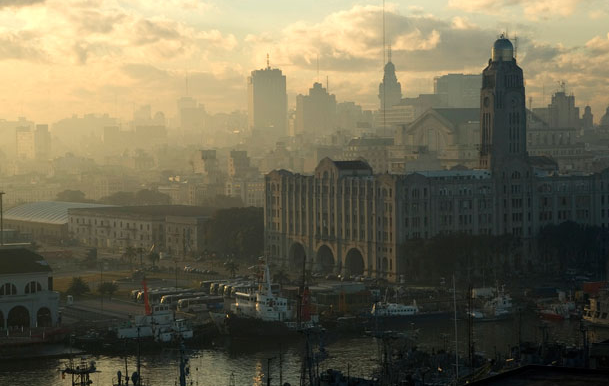
Montevideo, Uruguay

Looking from above, we often search for glimpses of north-ness down in the South. Along with the glittering Paris’s and Venices of the South, there are several locations that lay claim to the title ‘Switzerland of the South’. Each identifies with different elements of Switzerland. For Tasmania, it is the picturesque mountain scenery. In the case of New Zealand, it is libertarian values. But the title has seemed particularly apt for a tiny nation wedged between the super-powers of South America.

Uruguay was crowned the ‘Switzerland of South America’ in the first decades of the 20th century. Nature had little to do with this title. It resulted more from the European social democratic system of liberal values and tax laws introduced by President José Batlle y Ordoñez. For a period, Uruguay was blessed by a prosperity ornamented with art deco architecture.

Yet there are less idyllic aspects of Uruguayan history not so visible from high above. Down on the ground, we find a fiercely political contest between conservative and radical forces. In the mid 19th century, a nine year civil war pitched the conservative whites, supported by Argentina and based in provinces, against the liberal reds, supported by European interests and concentrated in Montevideo.

The North took great interest in this battle. The siege of Montevideo was compared by Alexander Dumas to the Trojan War. Giuseppe Garibaldi led the Italian legion in the eventual liberation of the capital. Europe cheered the liberal urban elites in their struggle against the feudal lords.

The political conflict during the 20th century was more internalised. During the 1970s and 1980s, Uruguay experienced a period of military repression which was particularly brutal, even by comparison with its neighbours. At one stage, Uruguay had the highest per capita percentage of political prisoners in the world. Like most other neighbouring countries, Uruguay is now governed by centre-left President, Tabaré Vázquez.
image
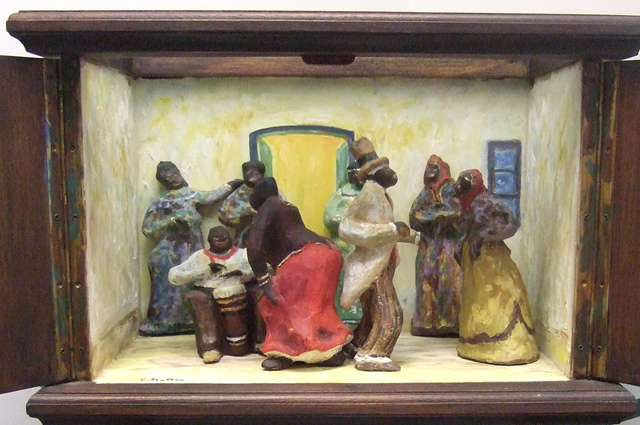
Ceramic cadombe scene (from Uruguay Embassy, Australia)

There is much in Uruguayan culture that is unique and different from the North. Unlike its neighbour Argentina, the culture of the African slaves survived to play a key role in defining its national identity. Candombe emerged in Montevideo as a dance performed by Africans in places called ‘tangos’. Today Candombe can be found as a procession of drummers who perform ‘llamadas’ (calls) as they march down streets—slowly to reference their previous life in chains. Competing tribes are distinguished by their own rhythm.

image

Also associated with carnival is Murga, a form of musical theatre derived originally from Cadiz, Spain. Murga is a play combining songs and recitative performed by a group of brightly dressed men, who sing in harmony to the accompaniment of percussion instruments. The content is often subversive and associated with resistance to previous dictatorships.
image
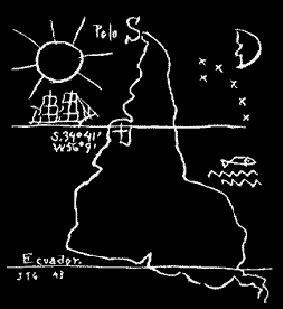
Joaquín Torres García El Mapa Invertido 1943
image
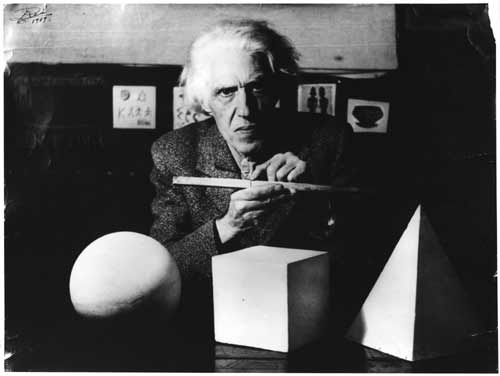
Joaquín Torres García

Leading cultural voices of Uruguay have strongly identified with its south-ness. The painter Joaquín Torres García lived in Paris during the 1920s, where he had been part of Pablo Picasso’s circle, and discovered pre-Colombian culture at the Trocadero. He returned in 1934 to establish the Escuela del Sur (School of the South), where he developed a movement unique to the South called ‘Constructive Universalism’. Torres García incorporated pre-Colombian symbols into a Western grid. For Torres Garcia, the South represented the future of art:

I have said School of the South: because, in fact, our North looks South. For us there must not be a North, except in opposition to the South… This correction was necessary; because of it we know where we are.[1]

image
Eduardo Hughes Galeano

The essayist Eduardo Hughes Galeano is a voice of conscience for Latin America as a whole. Books such as The Open Veins of Latin America and his three volume series Memory of Fire outline the brutal events that accompanied the emergence of Latin America. Recently in Democracy Now, Galeano described the cultural syndrome of impotence prevalent in the South:

…something condemning you, dooming you to be eternally crippled, because there is a cultural saying and repeating, “You can’t.” You can’t walk with your own legs. You are not able to think with your own head. You cannot feel with your own heart, and so you’re obliged to buy legs, heart, mind, outside as import products. This is our worst enemy…

For Upside Down World, he locates this lack of confidence particularly in Latin America:

All through the first half of the nineteenth century, a Venezuelan called Simón Rodríguez, travelled through the roads of our America, on a mule, challenging the new holders of power: “You,” Simon would cry out, “you who so imitate the Europeans, why don’t you imitate from then what is most important – originality?”

image
Mario Benedetti

The poet Mario Benedetti is equally famous across Latin America, though his politics is expressed in a more personal language. He began his writing career as a journalist, until his paper Marcha was shut down by the dictatorship. Bendetti was drawn out of Uruguay. Inspired by the 1959 Cuban revolution, he went to live in Paris during the early 1960s, when he wrote Noción de Patria (A Notion of My Country, 1962). This poem opposes imported models of place to the more authentic experience of unfamiliarity:

But now there aren’t any excuses left
Because it all relates back to this place
It always relates back to this place.
Nostalgia seeps out of books
And plants itself under my skin,
And this city that never sleeps,
This country that doesn’t dream,
Quickly becomes the only place
Where the air is mine
The fault is mine
And the sag in the mattress is mine,
And when I extend my arm I’m sure
About the wall I touch, or the emptiness that surrounds me,
And when I look at the sky
Over here, I see clouds, and over there, the Southern Cross
Everybody’s eyes make up my surroundings
And I don’t feel as if I’m on the outside
Now I know that I don’t feel as if I’m on the outside.

Maybe my only notion of my country
Is this urgent desire to say Us
Maybe my only notion of my country
Is this return to the uncertainly itself.[2]

After living in Havana during the late 1960s, Benedetti returned to Montevideo, where he founded a coalition of left-wing groups. Assassination attempts forced him to flee to Spain. Since his return, Benedetti has been a leading voice for the newly confident Latin America. In 2005, Hugo Chavez quoted his poem ‘The South Also Exists’ at the opening of the G-15 Summit:

With its French horn
and its Swedish academy
its American sauce
and its English wrenches
with all its missiles
and its encyclopedias
its star wars
and its opulent viciousness
with all its laurels
the North commands,
but down here
close to the roots
is where memory
no remembrance omits
and there are those
who defy death for
and die for
and thus, all together
work wonders
be it known:
the South also exists.

This performance by Joan Manuel Serrat responds to the vertical position of the South:[3]

New dimensions of Uruguayan culture are still being discovered. A publication by a 19th century anonymous Uruguayan writer has recently been unearthed. The Book of Disengagements is a series of aphorisms in the style of Ferdinand Pessoa, which celebrates non-being. In a very abbreviated form, they reflect the presence in absence where Uruguay seems to find itself:

You are nothing, true; but that nothing already is something.


Notes

Special thanks to Andres Pelaez for his assistance with this entry. Also see Carlos Capelán for a more complex perspective.

[1] Arnulf Becker Lorca ‘Alejandro Álvarez Situated: Subaltern Modernities and Modernisms that Subvert’ Leiden Journal of International Law 2006, 19, pp. 879-930

[2] Mario Benedetti Little Stones at my Window translated by Charles Hatfield, Willimantic: Curbstone Press, 2003
[3] A more politicised version can be found here.

A limit to South?

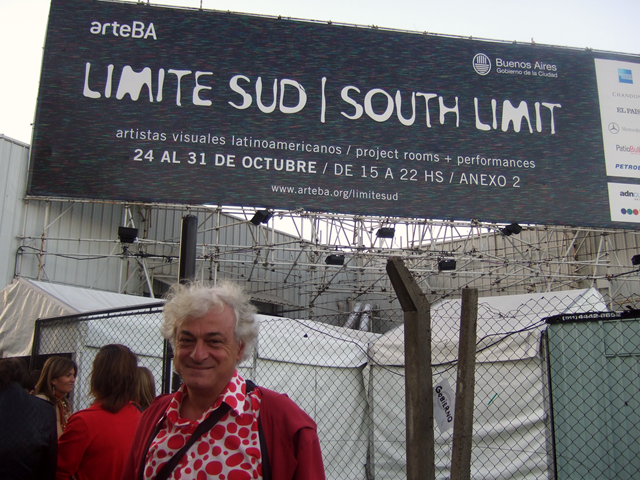
image Argentinean photographer Marcelo Brodsky at opening of Limite Sud

In late October, ArteBA launched Limite Sur | South Limit as an Argentinean add-on to the São Paulo Biennale. The title refers to the relation of Buenos Aires to São Paulo and bears no relation to the work inside. The event is structured like an art fair with booths for commercial galleries representing individual artists. The only tangential reference to an idea of South came from Javier Barilaro:

image Javier Barilaro Me desatino si me impongo un destino + un millón de colores de hielo (I am foolish if I impose a destination + million colors of ice)2008

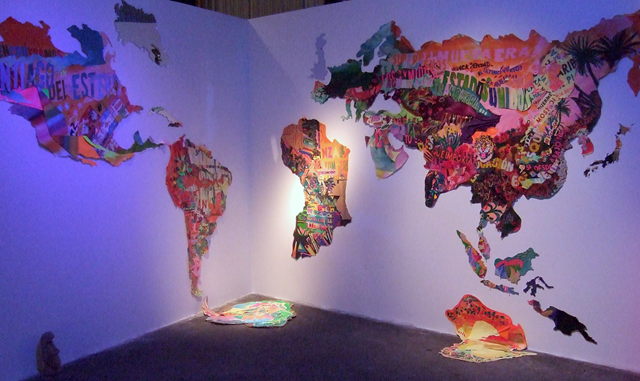
Barilaro’s collage work depicts various nations with garish packaging as part of his overall project of popularism – Filosofía Combiera (Philosophy of the Cumbia). As often happens in Latin America, Australia falls off the map.

Like the Design Indaba theme It’s a South Thing in Cape Town, the use of ‘south’ in the Buenos Aires event is a pure branding exercise. How long will it be before someone bites the bullet and puts some content into the South concept?

Tahiti – Time to eat time!

Around 1,000 years after Tahiti was first settled by Polynesians, the English sailor Samuel Wallis arrived to claim the territory as ‘King George the Third’s Island‘. The Tahitians attempted to repulse the intruders, but the superior weaponry of the English made an unequal match. When the French explorer Louis Antoine de Bougainville arrived the following year, in 1768, he was given a much friendlier reception. In response, he claimed the territory for France as ‘New Cythera’. In his 1771 publication, Voyage autour du monde, Bougainville depicted the island as an earthly paradise, far from the corruption of civilisation.

imageBougainville’s report had a strong effect on the French enlightenment, inspiring the utopianism of Jean-Jacques Rousseau. In his Supplément au voyage de Bougainville, Denis Diderot uses the Tahitian figure Ohou as a foil for critiquing Western civilisation. Ohou explains the readiness of Tahitian men to share their womenfolk with the Europeans as a long-term strategy to appropriate all the best of their civilisation into their own culture. Diderot reflects, ‘Savage life is so simple and our societies are such complicated mechanisms. The Tahitien is near the origin of the world, the European near its old age.’ While the idea of South as a child is often presented negatively, particularly in a developmental paradigm, in this case it indicates an innocence with more future than the jaded Old World.

Following two visits by James Cook, Tahiti was chosen by the English as a source of breadfruit to be used as cheap food for slaves in the West Indies. In 1789, the captain of the ship commissioned for this purpose was deposed by rebellious sailors who turned their backs on civilisation and resigned themselves to die in the antipodes. The ‘mutiny on the bounty’ reflects the conflict in expanding English empire between the force of order located in the cold dark North and the temptations that seemed on offer in the warm verdant South.

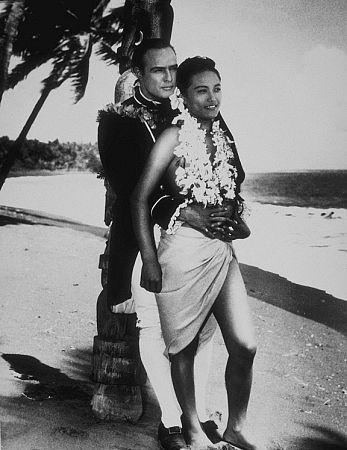
image The spirit of Fletcher Christian continues. While playing the rebel in the 1961 film version, Marlon Brando turned his back on America, married his Tahitian lead and purchased the island first chosen by Bligh’s deserters as an escape. This came to a violent denouement when his first son called Christian murdered his Tahitian daughter’s native husband. The real Fletcher Christian’s men settled on Pitcairn Island, burnt the Bounty, and created an English-Tahitian hybrid micro-society, which is still alive today in Norfolk Island. As is usual, the only news coming from this world is of sexual abuse and murder. We hear little of the thriving artistic and literary life on the islands.

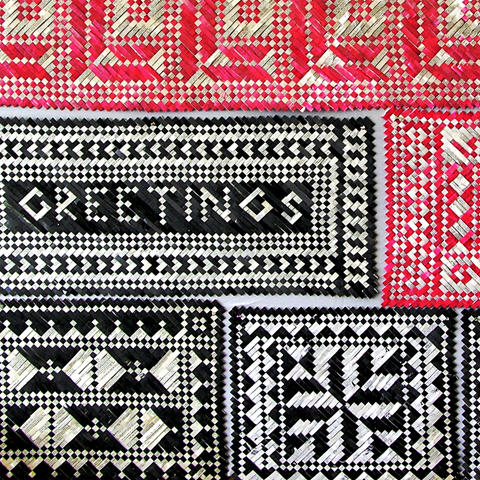
Norfolk Island fibre artist Margarita Sampson ‘Welcome/Greetings’ (2006) recycled books & ink. 6ft x4 ft wide. Photo: Alex Kovoskali, shown at Craft Victoria along with Dar Plait fe Ucklun Norfolk Island Weaving for Common Goods. image

Bounty Chocolate Bar, produced by Mars, used the idyllic image of the Pacific island as a fantasy for consumers to indulge while eating a ‘taste of paradise’.

image One enduring legacy of these first visits is the tattoo. In a society without capital, the tattoo was a principle means by which power and status could be acquired. All it needed was the capacity of the individual to endure great pain. After recovering from the ordeal, proof of their strength was available for all to see. The European sailors who acquired tattoos for themselves then introduced this skin economy into the West, where it still flourishes today, particularly among those who do not have access to other forms of capital. The tattoo is one of the most visible ways in which the South has imprinted itself on the rest of the world.

In 1842, Queen Pomare signed a treaty that made Tahiti a French Protectorate. Etablissements français d’Oceanie became a space for artists to position themselves against the conventional order. In 1891, Paul Gauguin arrived in Tahiti seeking escape from the modern world. Having grown up in Peru, Gauguin shared with van Gogh a love of ‘primitive cultures’ such as the Brittany peasant. His journal Noa Noa documents Gauguin’s journey away from civilisation into the full life of nature. After joining vigorous work with natives, Gauguin can finally claim to be one of them:

image

This cruel assault was the supreme farewell to civilization, to evil. This last evidence of the depraved instincts which sleep at the bottom of all decadent souls, by very contrast exalted the healthy simplicity of the life at which I had already made a beginning into a feeling of inexpressible happiness. By the trial within my soul mastery had been won. Avidly I inhaled the splendid purity of the light. I was, indeed, a new man; from now on I was a true savage, a real Maori.

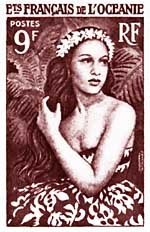
imageGauguin’s paintings have become a universal symbol of Tahiti as a world of classical beauty. This has become ever more commodified through tourism and consumerism. In 1913, the first postage stamp from this region contained a dusky beauty with a hibiscus flower behind her ear. It was only a matter of time before Club Med set up shop.

In 1963, as France anticipated Algerian independence, Charles de Gaulle chose the Pacific territories as the new site for nuclear testing. The assumption was that the atolls and their surrounding waters were empty. Tensions rose during the course of atomic explosions on Moruroa. In 1977, the Polynesian Liberation Front was formed by Oscar Temaru, who is now president of the local parliament. In 1992, during the ‘day of the waters’, PLF leaders gathered in Salzburg to articulate their position. Myron Mataoa stated, ‘Now this island of Moruroa — you know what Moruroa means? Moruroa means “the land of secret”. The land of secret. And today that land is really a land of secret where we don’t get any information from the French administration on how bad was their testings since 1966.’

Tourism is a dominant force in contemporary Tahiti. The German-born sculptor Andreas Dettloff has produced a series of work in the mode of ‘reverse primitivism’, depicting forms like shrunken skulls but with Western iconography such as Coca-Cola. One of his most successful series were skulls supposedly of Gauguin. A resident for twenty years, Dettloff’s work is disliked by tourist operators, but enjoyed by native Tahitians.

image

Gauguin in his last décor (Andreas Dettloff, 2008)

image A major force in Tahitian cultural revival was the poet Henri Hiro, who called on his people to recover their lost culture. His called on Tahitians to ‘Eat the time! It is necessary to eat time! You must eat the time lost by your past!’ The Tahitian concept of time and space is opposite to the Western: Tahitians look forward to the past, while their backs are turned to the future. To eat the time is to devour the process of Westernisation that has alienated Tahitians from their culture. Like the Brazilian concept of anthropofagi, it evokes cannibalism as a cultural response to the outside world.

Hiro has been followed by a number of women writers whose writing has been described as a form of ‘ancestral realism’ in which previous generations are considered an active presence in daily life.

From the Western perspective, Tahiti represents the idea of South as a prelapsarian world from which an attack can be mounted on the dominant order. Tahiti was first used by bourgeois French intellectuals to critique the over-civilised Ancien Régime, and continues to be used as a satire on the contemporary global order by those at its periphery.

And where do the Tahitians themselves stand in this. Are they mere extras in cinematic Western fantasies? Recent Tahitian voices seem to revert back to the hostility they showed their first English visitor, Wallis. Perhaps that is the legacy of innocence. Cast as children, Tahitians are positioned beyond the law, without adult forms of exchange. Violence might seem the only way to assert identity. The situation appears similar to the myth of El Dorado in Colombia.

This duality of innocence/violence seems an important dimension to Western ideas of South. It’s interesting to understand its dynamics and whether the same applies to ideas of South from other directions.

References

  • Greg Dening Mr Bligh’s Bad Language: Passion, Power and Theatre on Bounty Cambridge: Cambridge University Press, 1992
  • Denis Diderot Supplement to the Voyage of Bougainville (1772)
  • Rod Edmond Representing The South Pacific: Colonial Discourse From Cook To Gauguin New York: Cambridge University Press, 1997
  • Paul Gauguin Noa Noa: The Tahitian Journal (trans. O.F. Theis) New York: Dover, 1985 (orig. 1919)
  • Miriam Kahn ‘Tahiti: The Ripples of a Myth on the Shores of the Imagination’ History and Anthropology (2003) 14: 4, pp. 307-326
  • Dan Taulapapa McMullin “The fire that devours me’: Tahitian spirituality and activism in the poetry of Henri Hiro’ International Journal of Francophone Studies (2005) 8: 3, pp. 341-357
  • Robert Nicole ‘Resisting orientalism: Pacific literature in French’, in (ed. Vilsoni Hereniko, Rob Wilson) Inside Out: Literature, Cultural Politics, and Identity in the New Pacific : Rowman & Littlefield, 1999
  • Robert Nicole The Word, The Pen, And The Pistol: Literature And Power In Tahiti Albany: State University of New York Press, 2001
  • Tattoo: Bodies, Art and Exchange in the Pacific and the West edited by Nicholas Thomas, Anna Cole and Bronwen Douglas London: Reaktion, 2005

Thanks to Margarita Sampson and Andreas Dettloff.

The idea of South: Australia’s global positioning

Issue 44 of Australian Humanities Review contains a number of important contributions to debate about Australia’s uncertain position in the South.

Margaret Jolly reflects on Raewyn Connell’s Southern Theory. She contests the use of South as a theoretical position:

In my view, use of the language of the cardinal points of cartography to describe inequalities between nations or peoples tends to naturalise and dehistoricise difference, to associate the points of the compass with the body habitus of up and down, left and right. Clearly this is at odds with Connell’s avowed aim to stress relationality between peoples and the changing contexts of power and knowledge across time and place.

Jolly proceeds to identify regional identifications that seem to be independent of hierarchy, such as the space of the Oceanic.

Her criticism opens up an important issue about the idea of South. Cartography has a tentative relation to experience. There is nothing in our immediate world that is necessarily ‘north’ or ‘south’. But that hasn’t prevented these directions taking on direct meaning. Through this axis the world is aligned along other vertical dimensions such as head and body.

Accepting that this has happened as part of colonisation does not necessarily lead to resignation. To contest verticalism it is important to understand the symbolic operation of world-making, and its contingent nature.

The existence of autonomous creative zones like Oceania is in danger of being subsumed even more easily into the North-South axis. It can conform readily to exotic view of the South as a place of collective spirit where society evolves in organic fashion.

If you don’t take a global view, someone will take it on your behalf.

Biggest in the Championship Hemisphere?

 
In English soccer, the play-offs for promotion to the Premiership league are currently underway. While it would seem obvious that any club would relish the opportunity to rise above Championship and play in the major league, it isn’t always the case. A nice article from Spiked talks about the reasons many would prefer to stay ‘below’:

It is much more fun challenging for promotion in a league that is genuinely competitive: dreaming the dream, if you like, rather than waking up to the over-hyped reality.

It’s interesting to consider the parallel situation globally, in the relation between the northern and southern hemispheres. Better to be the ‘biggest in the southern hemisphere’ than to be a minor player on the world stage.

Also read Going Up would Get me Down.